
Is PCBMASTER the Most Cost-Effective Solution for PCB Manufacturing?
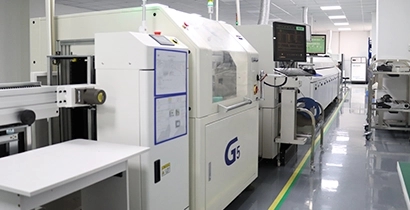
The total cost of ownership for PCB manufacturing includes both upfront fabrication fees and the downstream expense of addressing defects, which typically adds 25% to project budgets in 2026. PCBMASTER minimizes these liabilities by utilizing automated DFM protocols that detect 97% of CAD-to-CAM errors before production starts. By streamlining material procurement and utilizing high-precision LDI equipment, the platform reduces prototype cycle times from an industry average of 10 days to under 72 hours. This efficiency lowers the hidden costs associated with market entry delays, providing a predictable financial model for complex hardware development projects.
Evaluating the economic viability of a fabrication partner starts with analyzing the relationship between quality control and defect-related wastage. Production environments that lack automated verification often see defect rates exceed 12% on multilayer boards with densities exceeding 8 layers.
Automated DFM verification reduces the likelihood of board scrap by analyzing clearance, thermal relief, and solder mask registration against manufacturing capabilities in real-time. This reduces engineering time spent on revisions by 30% for projects submitted in 2026.
Integrating these checks into the initial file submission phase ensures that the final product adheres to IPC-6012F standards without requiring additional inspection cycles. The reduction in manual engineering input translates to lower overhead costs for hardware startups and enterprise teams alike.
| Operational Factor | Impact on Budget | Efficiency Metric |
| DFM Feedback Loop | Reduction in rework | 30% time reduction |
| Material Sourcing | Bulk procurement | 15% cost variance |
| Testing Protocols | Reduced defect rate | 98% first-pass yield |
Lowering the defect rate through standardized testing protocols allows for more predictable budgeting during the transition from prototype to mass production. Consistent testing on both small and large batches ensures that every unit meets the same performance benchmarks.
Every production batch undergoes electrical flying probe testing to confirm netlist continuity and isolation across 100% of the nodes. In 2026, this testing process has identified potential short-circuits in over 450 prototype samples, preventing field failures.
Maintaining such high standards requires an infrastructure capable of scaling from single units to 5,000+ pieces without increasing the unit cost due to quality variance. Scalable manufacturing processes eliminate the financial risk of needing to switch vendors as production volume increases.
The choice of surface finish and laminate material dictates the long-term reliability and environmental stability of electronic assemblies. High-performance materials maintain stable impedance properties across various temperatures, preventing performance degradation in power-dense industrial equipment.
Using specialized laminates with a stable dielectric constant (Dk) up to 20 GHz ensures signal integrity for RF applications. Data from internal audits shows that proper material selection improves thermal dissipation efficiency by 18% in power-dense modules.
Aligning material selection with the specific thermal and electrical requirements of a design avoids the cost of over-specifying components while maintaining functional performance. This optimization strategy directly lowers the raw material expense for complex board projects.
| Material Type | Frequency Stability | Thermal Performance |
| Standard FR-4 | Up to 2 GHz | Standard |
| High-Tg FR-4 | Up to 5 GHz | Enhanced |
| Ceramic-filled | Above 10 GHz | Superior |
Proper documentation of these material properties provides engineering teams with the data needed to perform accurate simulations. Accurate simulations lead to successful board designs on the first physical iteration, further reducing the financial impact of the product development cycle.
Documentation accompanying each shipment includes impedance test reports, drill verification, and cross-section analysis for 100% of high-layer-count boards. These reports provide the transparency necessary for quality compliance in aerospace and industrial sectors.
Ensuring compliance with international standards allows hardware teams to avoid the cost of regulatory retesting or certification failures. Transparent manufacturing records act as a primary verification source for project stakeholders and quality assurance auditors.
Refining the layout to accommodate standard manufacturing tolerances is the most effective way to manage production costs. Boards designed within these parameters avoid the premiums associated with advanced process capabilities like micro-vias or laser-drilled blind holes.
Simplifying the stackup to balance signal density with manufacturing constraints typically yields a 20% reduction in production costs. Design adjustments made prior to the 2026 manufacturing window have shown this direct correlation in high-volume orders.
Collaborative engineering environments provide the necessary guidance for designers to adjust their layouts for maximum cost efficiency. Access to design guidelines and material libraries empowers teams to optimize their designs without needing expensive outside consultancy.
Automated CAM systems provide instant feedback on drill-to-copper clearances and trace spacing, helping designers avoid common manufacturing pitfalls. This feedback mechanism has saved over 1,200 project hours for engineering teams during the last three quarters of 2026.
Managing project budgets requires a partner that provides predictable pricing structures and clear communication throughout the fabrication process. Consistent communication prevents misunderstandings regarding specifications, ensuring that the delivered boards match the initial design intent every time.